


Credit lines
Document the credit provider, credit recipient, credit amount, current status, usage terms, and lifecycle changes.
Credit operations workspace
Credit Reaper helps companies manage credit lines between brands, stores, vendors, and service providers with balances, transactions, evidence, access, activity, and reports.
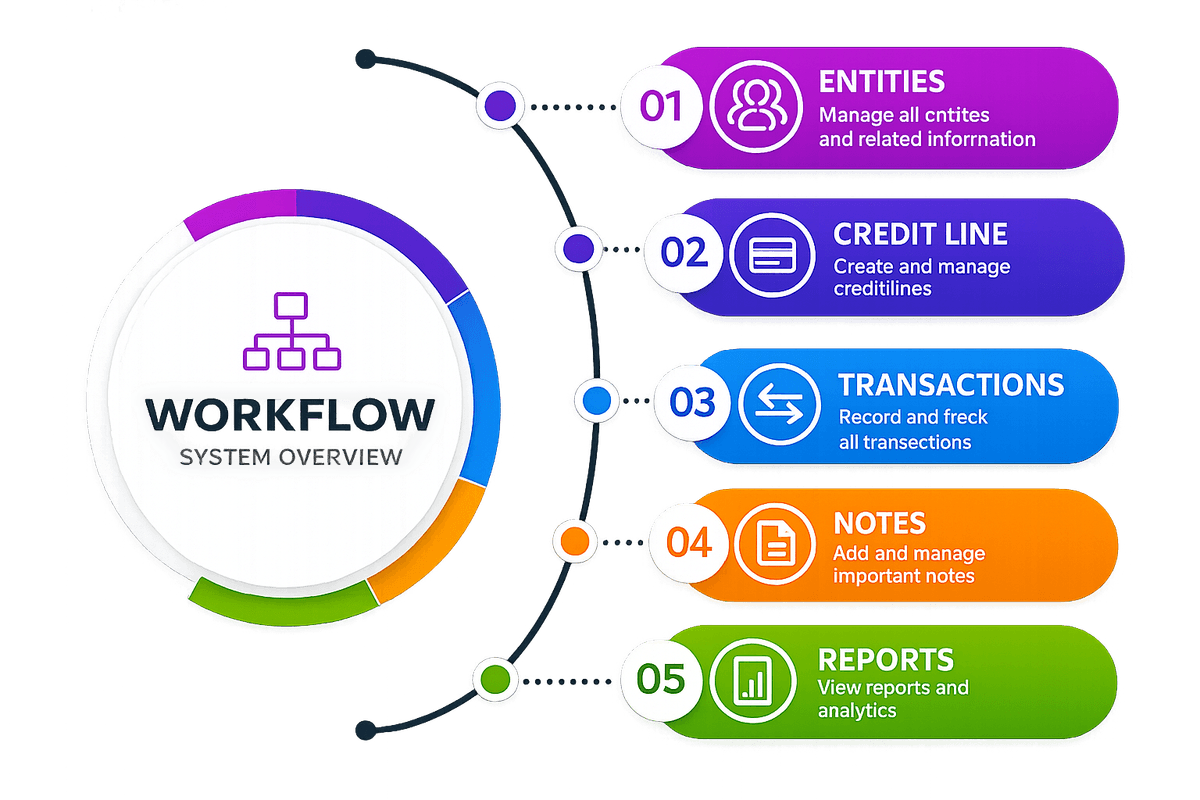
One connected trail from the company record to accountable reporting.
The company record anchors the credit relationship.
Built for connected operators
The problem
Texts, spreadsheets, invoices, and verbal agreements do not give operators one reliable place to understand what was offered, available, used, disputed, and documented.

Credit Reaper gives finance and operations teams a structured workspace for active credit lines, balance movement, transaction context, and audit-backed activity.
Core features
Credit Reaper focuses on the practical records teams need before layering in broader integrations or advanced messaging.
Document the credit provider, credit recipient, credit amount, current status, usage terms, and lifecycle changes.
Track balances as operational events happen without relying on a disconnected spreadsheet total.
Record usage, adjustments, reversals, and reconciliation events tied to each credit agreement.
Keep a timeline of meaningful changes so teams can see what changed, when, and why.
Attach context to credit lines and transactions while keeping note visibility scoped to the workspace.
Review available balances, exposure by entity, recent changes, and summary cards backed by API data.
Give brand, store, vendor, or processing-center users access to the credit data they are allowed to see.
Notification inbox updates, request activity, and audit history help teams see what needs attention. Email reminders and message-log workflows remain planned enhancements.
How it works
Start with the real entities in your business, then let activity and reports build from those records.
Solutions
Credit Reaper is shaped for operators who need entity-level clarity without forcing every user into company-wide visibility.
Track product credits, promotional allowances, rebates, and advertising credits provided to stores, vendors, service providers, and operating partners.
Track usable product credits, promotional allowances, damaged-item credits, disputed lines, and credit activity with clear supporting notes.
Maintain visibility into balances, commitments, and recently changed credit relationships by customer entity.
Keep service credit, usage, and balance movement tied to the correct entity and credit line.
Separate operational entities while still giving company owners and admins company-wide reporting.
Document informal arrangements with the same activity history and note discipline as formal accounts.
Track product credits, promotional allowances, rebates, and advertising credits provided to stores, vendors, processors, and service providers.
Understand usable product credits, promotional allowances, damaged-item credits, disputed balances, and credit activity by relationship.
Keep customer credit arrangements, recent changes, and notes visible without sharing company-wide data.
Reporting and visibility
Dashboard cards and report views are backed by real API data and respect the current user's company and entity scope.
Assigned users see credit lines, notes, activity, and reports tied to the entities they can access.
Scoped access
Owners and admins can work company-wide. Brand, store, vendor, and other assigned users see credit lines, activity, notes, and reports for their permitted entities.
Communication workflow
Credit Reaper supports internal/shared notes, transaction-linked notes, request notifications, and an audit timeline. Email reminders and message-log workflows stay clearly labeled until they ship.


Teams can review the transaction trail, supporting documents, and notification history without switching to a separate spreadsheet or folder.
Credit Reaper
Sign up to create a workspace, or contact us to discuss a supported rollout.